
Why Recovery After The Jiffy Bunion™ Is So Different
For decades, the biggest reason people delayed fixing a painful bunion wasn't the surgery itself—it was the fear of recovery. Traditional open bunion surgery often meant a 3-to-4-inch incision, wide soft-tissue stripping, weeks in a heavy cast or knee scooter, and months before fitting into a normal shoe.
The Jiffy Bunion™ uses a minimally invasive approach through tiny 1 mm incisions. Because the surrounding joint capsule and soft-tissue envelope are preserved and the realigned first metatarsal bone is locked securely with two specialized headless beveled screws, your recovery starts with immediate weight-bearing in a protective post-op shoe on surgery day.
- Day 0 (Surgery Day): Outpatient procedure; walk right away (limited weight-bearing as tolerated) in your special post-op shoe.
- Day 5: First clinic visit with Dr. Moore's team for your first dressing change and post-op X-ray check.
- Week 1+: Foot can get wet in the shower after the first week once cleared.
- Week 2: Stitches removed; walking comfortably in the post-op shoe; driving typically resumes around 2 weeks (once off pain medication and able to brake safely).
- Week 6 (Average): Transition into wide, supportive regular athletic shoes.
- Weeks 10–12: Return to running, CrossFit, and high-impact exercise.
Why the Day-1 Post-Op Dressing Matters So Much
Your recovery starts in the operating room with the specialized dressing Dr. Moore applies at the end of your procedure. Soft sterile gauze is layered smoothly between and around your big toe—with zero wrinkles—followed by a gentle elastic compression wrap.
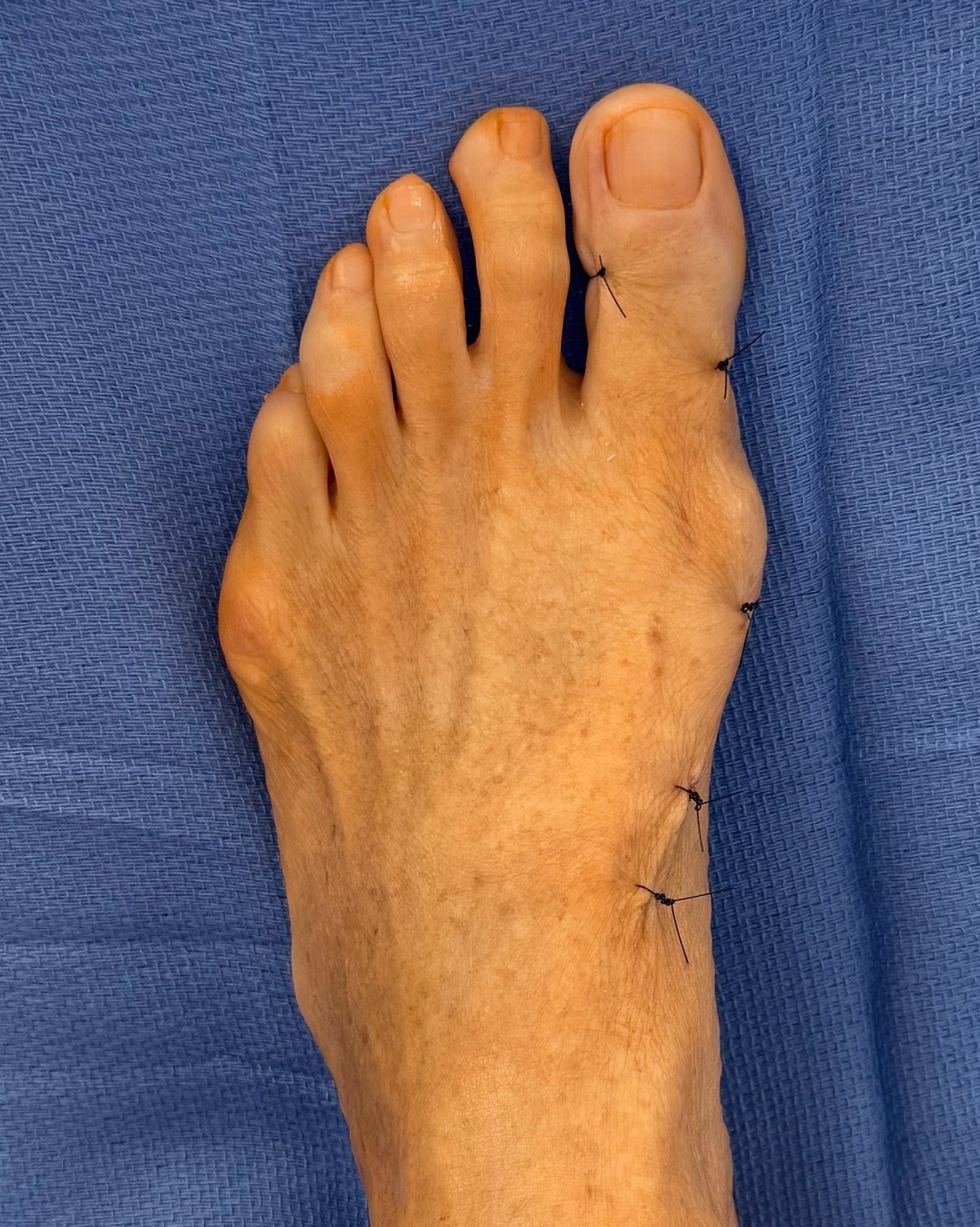
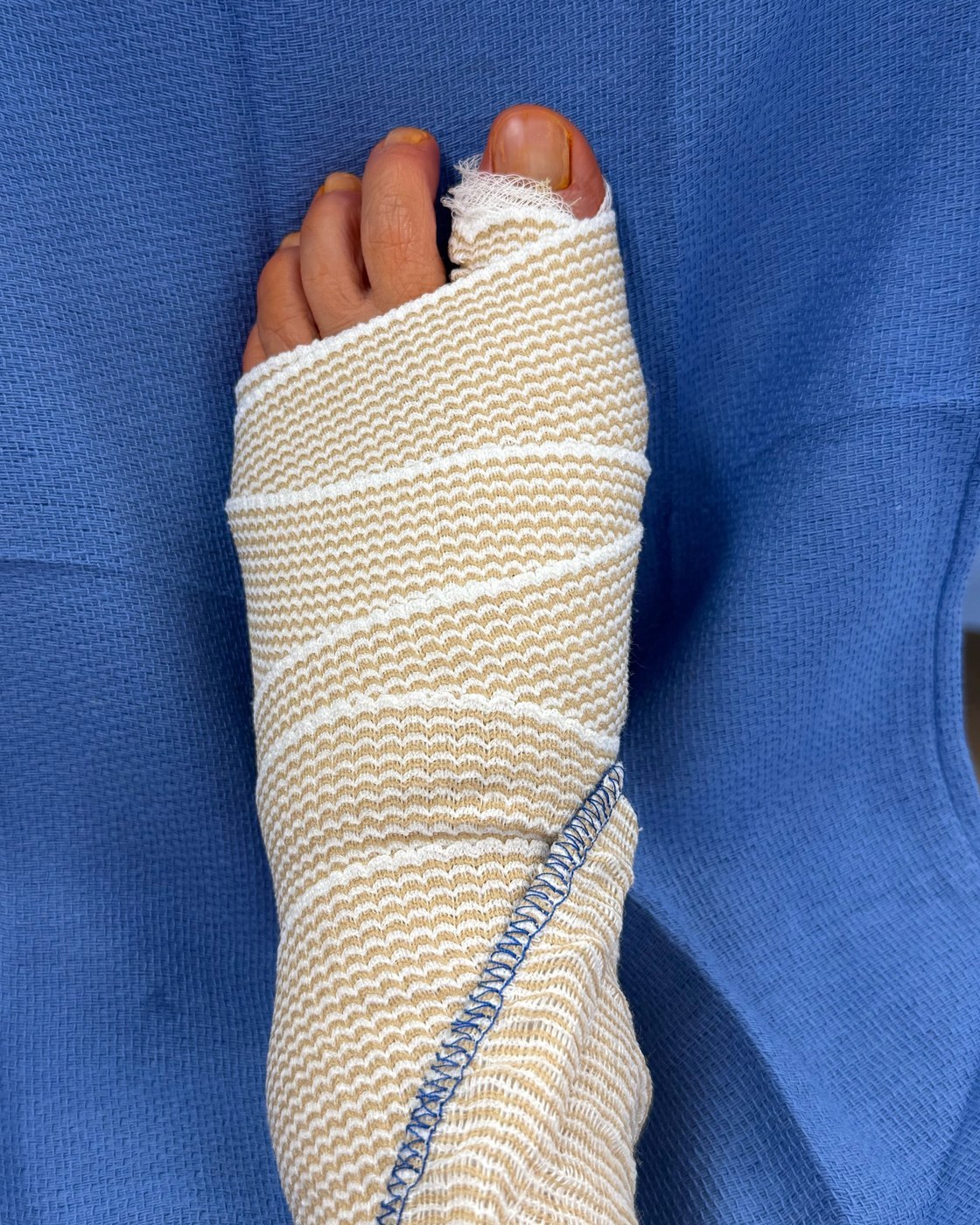
This dressing acts like an external splint that works alongside the two internal headless screws to cradle your big toe in its straight alignment while keeping early swelling down. Do not remove or disturb this original dressing at home—keep it clean, dry, and intact until Dr. Moore's team changes it at your first clinic visit around Day 5.
Milestone-by-Milestone Recovery Timeline
Days 0 to 4: Home the Same Day, Walking & Elevating
You go home the same day of surgery wearing your protective flat post-op shoe. You are permitted to put weight on your foot as tolerated inside the post-op shoe right away. During the first 3 to 5 days, keep walking limited to short indoor trips (such as the bathroom or kitchen) and spend plenty of time resting with your foot elevated above the level of your heart to minimize throbbing and swelling.
Day 5: First Clinic Visit & Dressing Change
Around Day 5, you will visit Atlantic Orthopaedic Specialists in Virginia Beach for your first post-operative check. Our team gently removes the surgical dressing, inspects the 1 mm incisions, takes standing or baseline X-rays to admire your new bony alignment, and shows you how to care for your foot.
Week 1 to Week 2: Showering, Stitches Out & Driving
- Showering: Your foot can get wet in the shower after the first week once cleared by Dr. Moore's team. Pat the tiny incision sites dry gently with a clean towel—avoid soaking the foot in a bathtub, pool, or ocean until the skin is completely sealed.
- Week 2 Visit: At around 14 days post-op, your small stitches are removed in clinic. By this point, most patients are walking comfortably throughout the day in their post-op shoe.
- Driving: If your left foot was operated on and you drive an automatic transmission vehicle, you can often drive within a few days once off prescription pain medication. For right-foot surgery, driving typically resumes around 2 weeks post-op once you can comfortably and safely stomp the brake pedal in an emergency.
Week 6: Transitioning Back Into Regular Shoes
At your 6-week clinic visit, Dr. Moore reviews new X-rays of your healing first metatarsal. On average, patients transition out of the post-op shoe and back into wide, supportive lace-up athletic sneakers around 6 weeks. Start gradually—wearing your athletic shoes for a few hours at a time and increasing daily as your foot adapts.
First 12 Weeks: Toe Spacers & Swelling Management
Even after you return to regular shoes at Week 6, you will wear a soft toe spacer between your first and second toes for the first 12 weeks after surgery. The toe spacer gently supports the healing soft tissues so your big toe matures in a crisp, straight line.
Remember that mild swelling is a normal part of bone healing. Most swelling subsides by 8 to 12 weeks, while subtle residual puffiness can gradually refine for up to 6 months (and occasionally longer) as the bone remodels.
Weeks 10–12 through 1 Year: Running, Sports & Remodeling
By Weeks 10 to 12, once X-rays confirm robust bony union, patients progressively return to running, CrossFit, hiking, and impact sports. Follow-up visits at 3 months, 6 months, and 1 year confirm complete bone remodeling.